
Fostering a kinder approach to mathematics

For a lot of us, when we hear the word ‘math’, it brings up a lot of emotions and feelings. Unfortunately a lot of those feelings are negative emotions connected to low self-worth, a lack of intelligence, shame, and embarrassment.
For way too many of us, it immediately brings up very distinct memories where a teacher or student embarrassed us deeply and oftentimes in front of an entire classroom of students. It’s true for the straight-A students as much as it is for the students who got C’s and D’s.
And so many of us can vividly remember these moments 5, 10, and 15 years later.
We’re often taught from a young age to tie our self worth to intelligence and to tie our intelligence to our math ability and those three things are not always connected. If you’re good at math, it doesn’t make you intelligent and being intelligent doesn’t mean you’re necessarily good at math. If we can start to dismantle those assumptions and approach math from a place of relaxation, curiosity, and fun; it sets a much better stage for success.
———————
The first person that judges us is ourselves. Let’s say we toss a math problem up on the whiteboard:
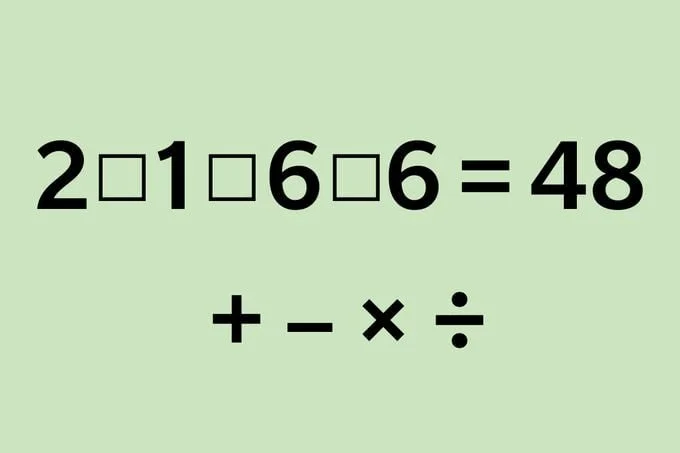
The problem is not really that important. What is important are the thoughts and feelings that immediately come to mind.
You might say something like “if I solve this math problem, I am smart” or “If I don’t solve this math problem it will confirm that I’m unintelligent” and whether you get the question correct or not, you’ve already set yourself up to fail. Because both of those statements about yourself are inherently untrue.
The truth is that solving this math problem, or any math problem, is actually a measure of how much of this type of problem you have solved before. In a small way it is a measure of your general learning and intellect but largely it is a measure of how many questions similar to this one that you’ve seen prior. Every math question is more a measure of your learned skill than of your innate math talent.
And so if you get the question correct, a healthier takeaway from the experience is that you’ve seen quite a lot of questions of this type. And if you get the answer incorrect, you haven’t seen that many questions of this type.
You can safely step away from placing permanent labels like “smart” and “dumb” on yourself and accept that your skill level can actually increase and decrease as you move from question to question and scenario to scenario.
Students often will place a label on themselves like “smart” and then feel an immense pressure to maintain appearances. Some students will place the label of “not good at math” on themselves and then discontinue all math practice before they even have had a chance to better themselves. Both ways of labeling yourself is unhelpful.
You are a human being capable of learning and improving to mastery and that is a skill that takes time to cultivate. That’s a helpful self-narrative.
Intelligence is not a fixed number despite what an IQ score might seem to imply. Rather intelligence is something that you develop with time and effort. Veritasium did a great video on how subjective the measure of IQ is and just how many factors can affect someone’s IQ on a given written exam.
The takeaway is that your potential is what you decide it to be. As of yet, no one can give you an objective score of your intelligence so why give that score to yourself?
—————-
The next place we receive judgement is from our fellow math students and our teachers. We cannot control this but we can control how we receive it.
One of the most important things you can learn in life is that people are only as kind to you as they are to themselves. When you feel a teacher or student making you feel stupid or inadequate, you have have to understand that they are, in fact, judging themselves. They too have experienced embarrassment and shame regarding their math ability and general intelligence. And if you feel insecure, it will reinforce those feelings.
But if you take a step back and recognize this process as it unfolds, you can give them grace to grow and heal. And by extension, you can give yourself the space as well to understand that those feelings are theirs and not yours. You can let go of their judgement and begin to take care of yourself.
People are only as kind to you as they are to themselves.
Slowly but surely, you can begin to develop a new approach to learning. In this new approach you embrace the feeling of vulnerability when asking for help. To put yourself in a place where someone else might view you as unskilled and unintelligent is a brave thing to do. As you pass through this place over and over again, reaching mastery in many different fields, you begin to cherish that space as something wonderful and, some might even say, sacred. It is the place out of which all learning, growth, and transformation begins.
The encouragement “be kind” is a simple one, but for all of us it is a lifelong journey. Being kind is the foundation for opening the space to learn. And being kind means healing your own generational math trauma before stepping into a role where you could potentially pass it on to the next generation of math students.
Ill-intentioned, a teacher can very easily destroy a student’s self worth, teaching a student in their body and emotions that learning is unsafe and to be avoided. Well-intentioned, an educator can gradually build a student’s self-confidence and set them up for success for the rest of their life.
Cultivating kindness towards oneself and others is crucial for a positive and successful learning environment. By recognizing that others' judgments often reflect their own insecurities, you can begin to let go of negativity from others and focus on your own unique learning journey. Being kind to yourself and others is a lifelong pursuit but ultimately one that will fundamentally shape your success as a teacher and student in the math classroom.